Categories
Bucknell/Local Interest Digital Humanities Environment General GIS GIS in History GIS in Humanities Slideshow

Georeferencing Historic Maps of Susquehanna Valley Region

Guest Post by Robby Holler, Geography/International Relations ’13

During the past two months, I’ve spent time working with other GIS interns with many of their projects.  Much of my time, though, has been spent on two projects: georeferencing an 1868 atlas of central Pennsylvania and georeferencing and vectorizing a map of Lake Otsego.  Both of these projects tie in closely to the Susquehanna River Valley and are part of the Stories of the Susquehanna program.

Most of the GIS student assistants pitched in to help with the 1868 atlas.  Together we georeferenced over 30 maps of central Pennsylvania.  To do this, we scanned pages from the atlas, clipped them to include only the maps, and then used stream, state road, and local road shapefiles to georeference them.  Most roads on the county maps correspond to still existing state roads.  The local presence of this project struck me as I drove down 522 a few days after georeferencing Middleburg, Beaver Springs, and Beavertown.  It was interesting to drive down highways I had mapped and recognize all the local cross streets.

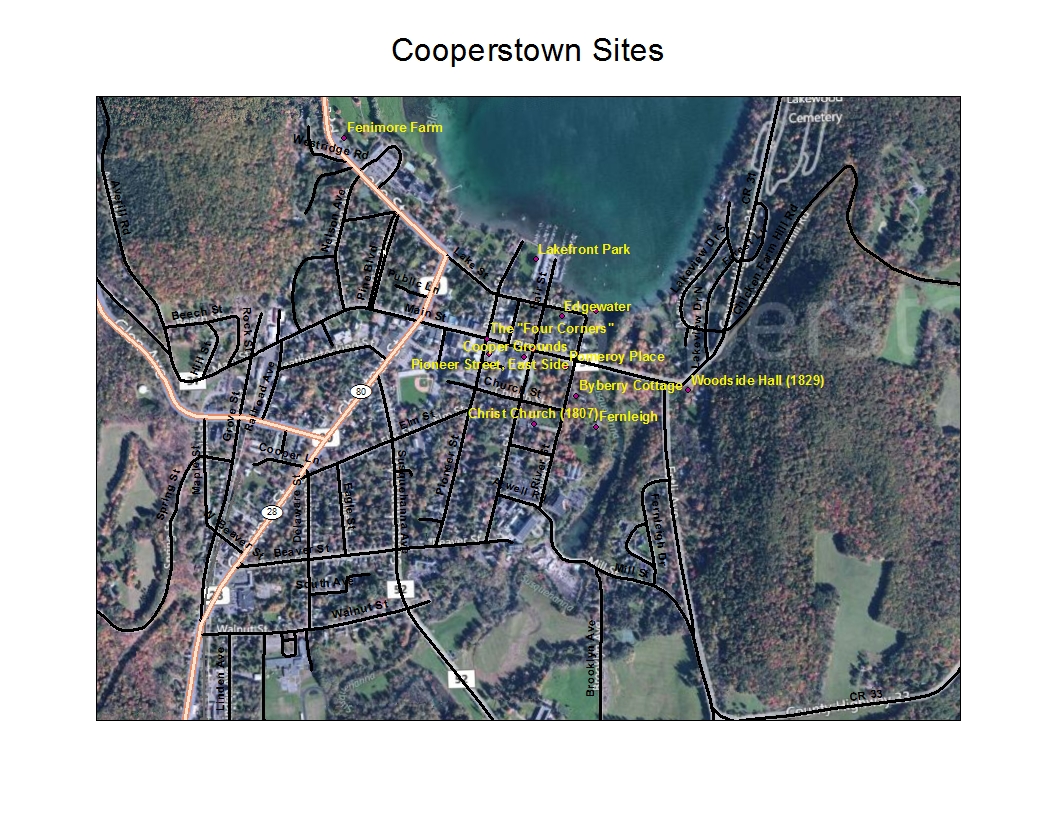
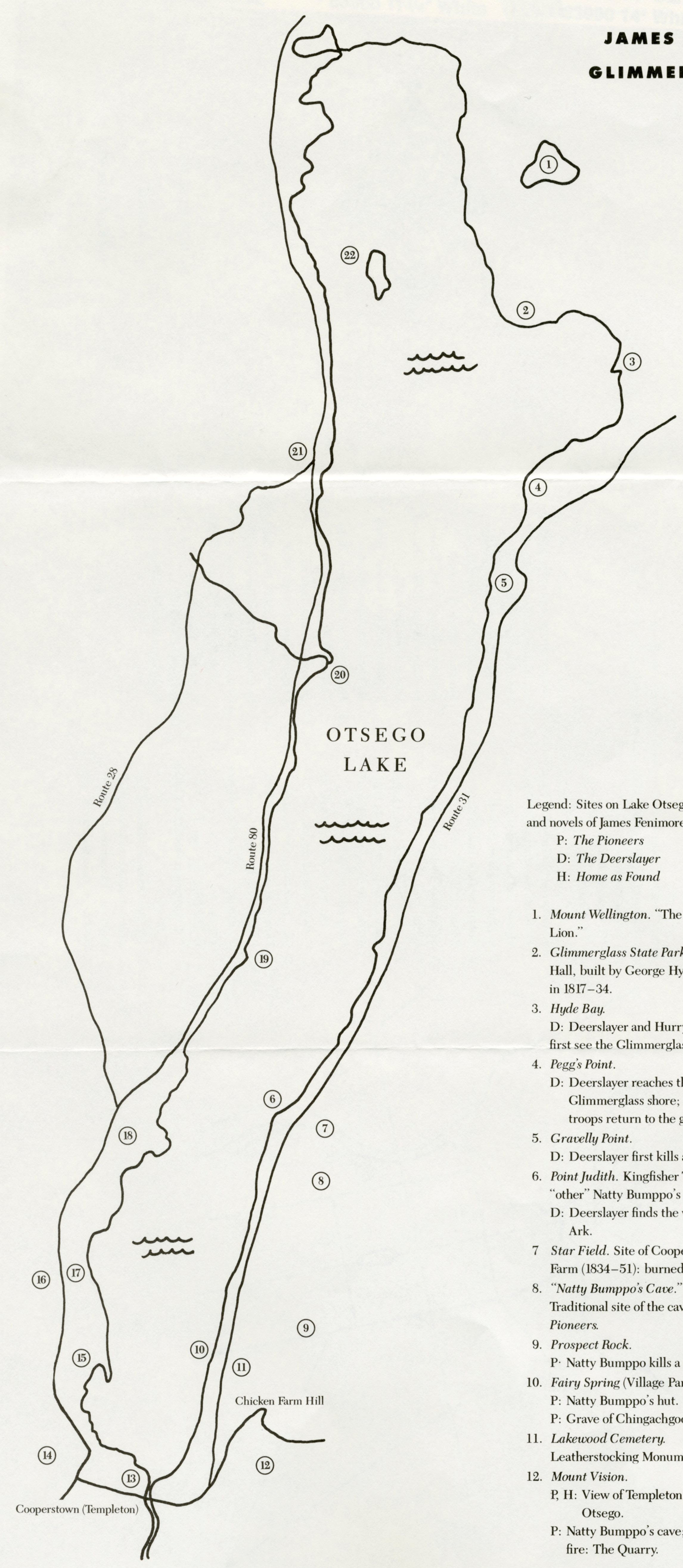
Lake Otsego is located in Otsego County, New York, and is known for three things: Cooperstown (the location of the Major League Baseball Hall of Fame, the headwaters ofthe Susquehanna, and the setting for James Fenimore Cooper’s novels, most notably Last of the Mohicans).  It is these last two facts that interest Alf Siewers, Professor of English.  He gave me a pamphlet titled “James Fenimore Cooper’s Otsego County” and asked me to vectorize the two maps on it.  One map focused on Cooperstown and the other on the whole lake.  Both displayed points important to Cooper and his family, or featured in his literature.  I georeferenced the lake image and then recorded all the points on the map by creating a new shapefile.  To vectorize Coopersburg, I didn’t need to georeference the given map.  I just used roads and local landmarks on a basefile to correctly place points in a new shapefile.  I edited the tables for each new shapefile to add information about every point, including names and known literary references from Cooper’s novels.  Finally, I created an exported final maps with BingMap hybrid basefiles, street layers, a transparent rectified original map, and my new shapefiles.


Categories
Bucknell/Local Interest Digital Humanities General GIS GIS in Environmental Studies GIS in Geography GIS in History GIS in Humanities Map Apps Marcellus Shale Slideshow Videos

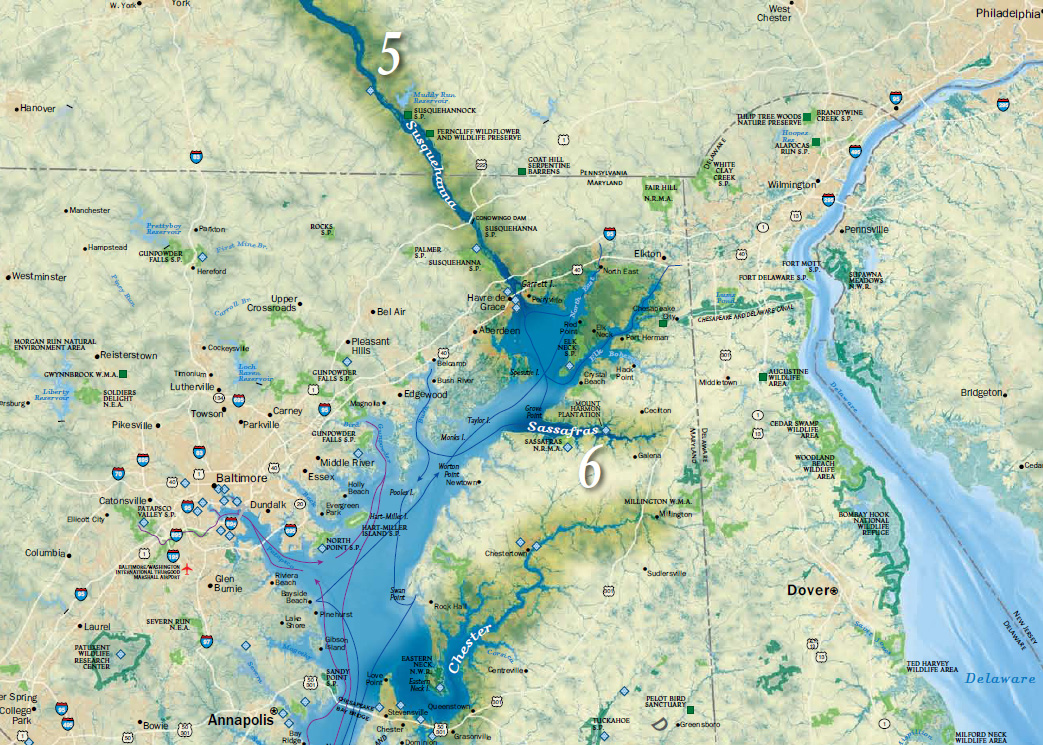
Uncovering the ‘Stories of the Susquehanna’ using GIS

Bucknell faculty have long had an interest in grounding their research efforts locally – using the physical, cultural, historical and sociological landscapes of the Susquehanna Valley region as a living laboratory. The two videos below feature Prof. Katherine Faull and student Emily Bitely ’11 talking about the role of GIS in two such projects – the Stories of the Susquehanna, and the John Smith Trail Extension project (both multi-year, inter-disciplinary projects involving faculty from across the campus).

Katie Faull discussing her use of GIS for the John Smith Trail Extension and Stories of the Susquehanna project:
httpv://www.youtube.com/watch?v=j2eG2v8FnOA

Emily Bitely ’11 discussing her use of GIS for the same projects:
httpv://www.youtube.com/watch?v=1uPcaaqSzII

More about the John Smith Trail:

  • To learn more about the John Smith Trail, click here or here.
  • To view a National Geographic map detailing Captain John Smith’s voyage, click here.
  • To view a map of interpretive ‘smart’ buoys located in the river, click here.

More about the Stories of the Susquehanna project:

  • A pilot web mapping application featuring two of the ‘Stories of the Susquehanna’ is scheduled to launch this fall.  Stay tuned for more details.
  • Click here to read about the 2010 Susquehanna Valley Summer Writer’s Institute (SVSWI).  The SVSWI project is related to the Stories of the Susquehanna both in the type of local stories it explores and in its use of maps, audio, video, images and text to reflect on those stories in an interactive digital story-telling environment.
  • Click here to view the SVSWI’s interactive mapping application featuring students’ reflections on the impact of the Marcellus Shale gas boom on different populations in the Susquehanna Valley region.
Categories
Bucknell/Local Interest Digital Humanities Environment General GIS GIS in History GIS in Humanities Marcellus Shale Slideshow

Ask the expert: Katie Faull on maps, Moravian diaries and Native American history

In the BU homepage’s February ‘Ask the Expert’ interview, Prof. Katie Faull discusses her research on the 18th Century Moravian settlers and Native Americans who inhabited the Susquehanna watershed region. With the help of her research assistant, Emily Bitely ’11, Prof. Faull has made extensive use of GIS in reconstructing 18th Century landscapes of the Susquehanna.  Read the interview here.

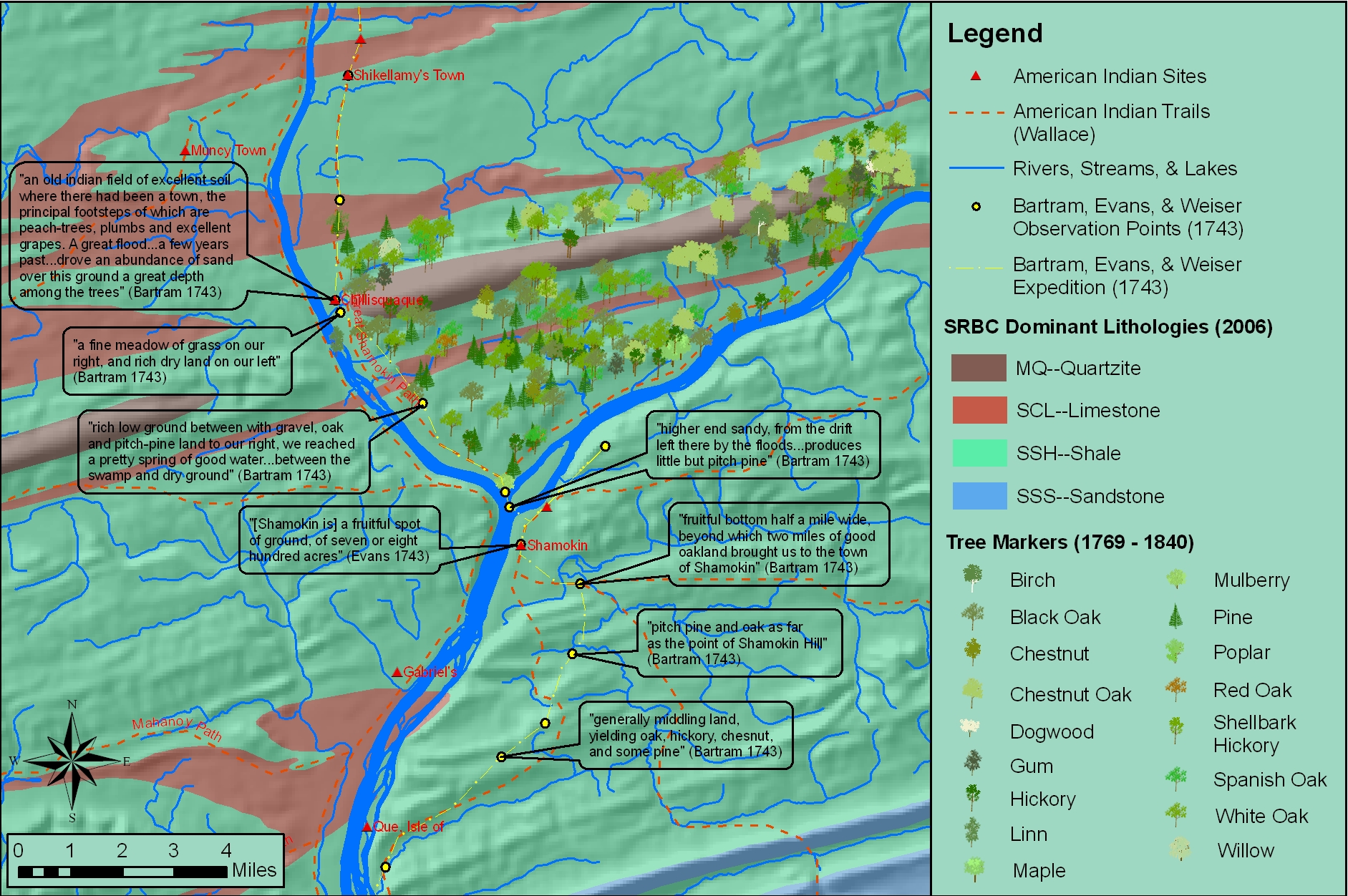
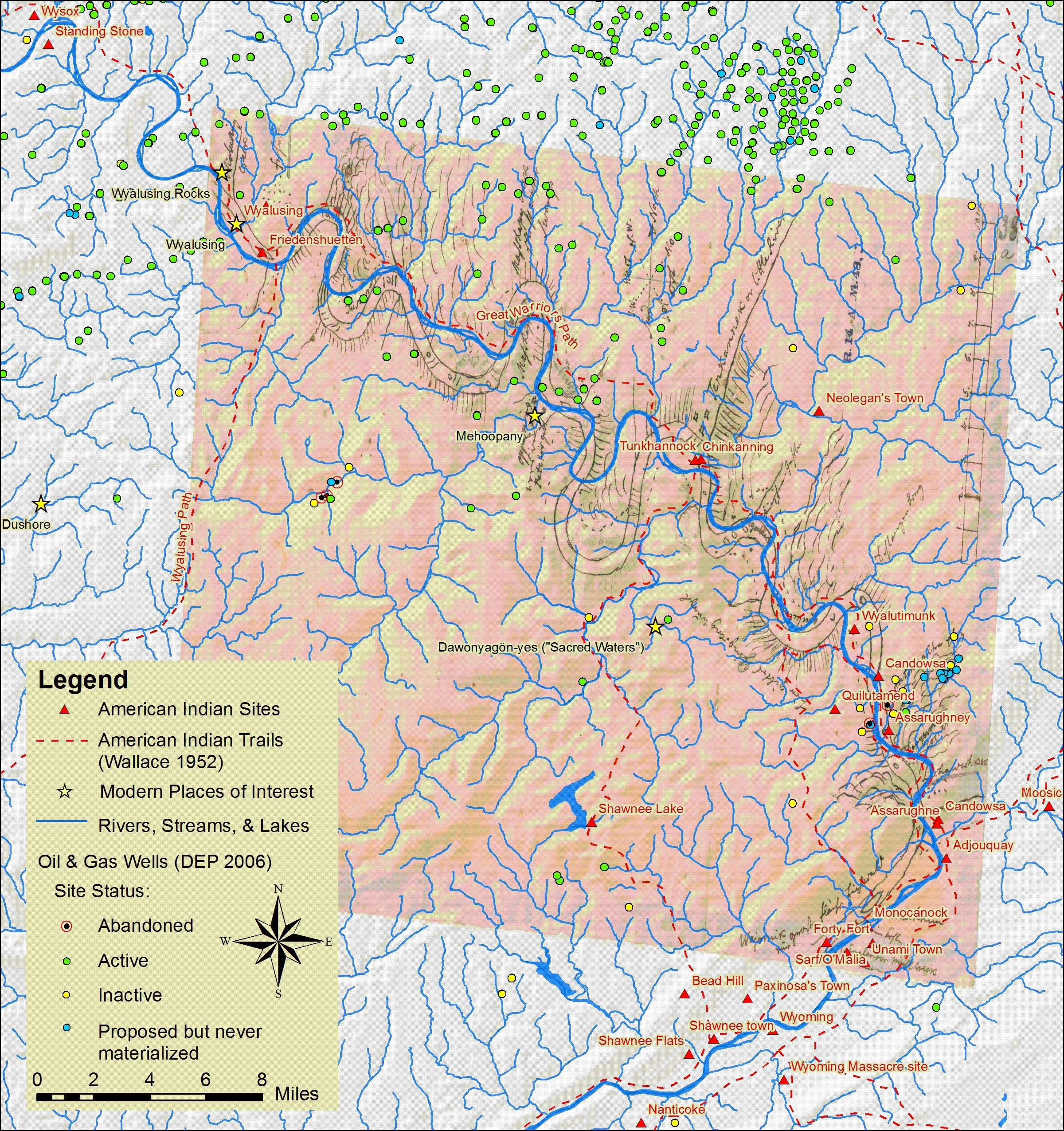
Sample map constructed from witness tree markers and georeferenced historic maps:

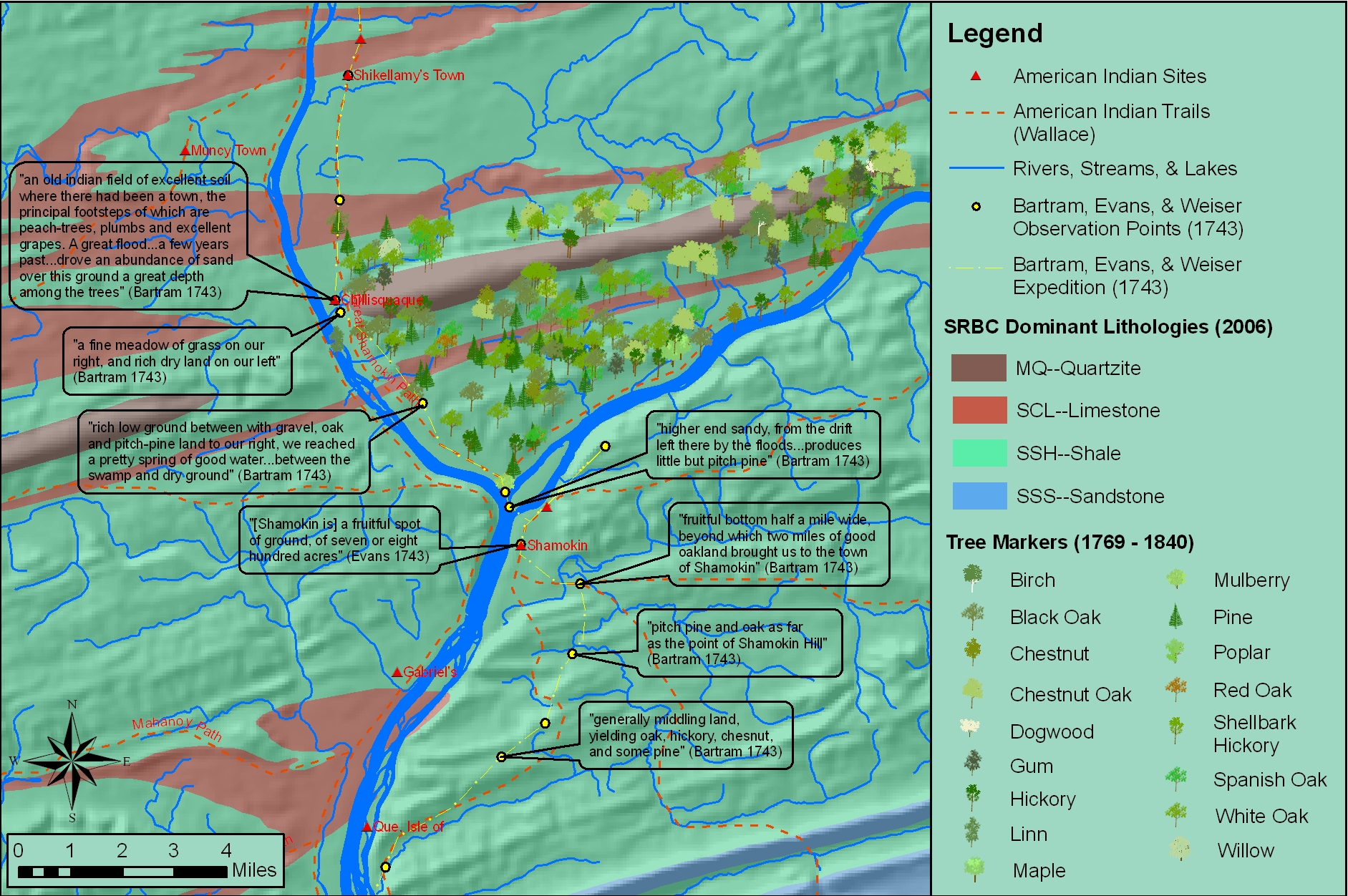
Sample map showing locations of Native American sites, trails and sacred places in relation to Marcellus Shale gas drilling.